

A Partial Hospitalization Program, or PHP, is often called Partial Care in New Jersey state networks. It is the stronger of the two options. People usually enter PHP when weekly therapy is not enough and symptoms are hitting hard each day.
This level of care can be the right fit after an inpatient stay or during a severe mental health downturn. It gives close support without requiring an overnight admission. For many people, it becomes the bridge that keeps things from tipping further.
- Daily Clinical Overviews: You get ongoing monitoring and medication support.
- Immersive Group Modalities: You spend the day in DBT and crisis-focused groups.
- Structured Environment: You stay in a safe space for most of the day.
 If you want a deeper look at daily structure, you can also review what a full day in a PC program looks like in New Jersey.
What is New Jersey IOP?
An Intensive Outpatient Program, or IOP, is built for flexibility. It gives real support, but it does not take over your whole day. That makes it a strong fit for people who are working, studying, or caring for family.
IOP is often a step down from PHP. It can also be a step up when standard therapy is not doing enough. The goal is simple. Help you stay grounded while you keep showing up for life.
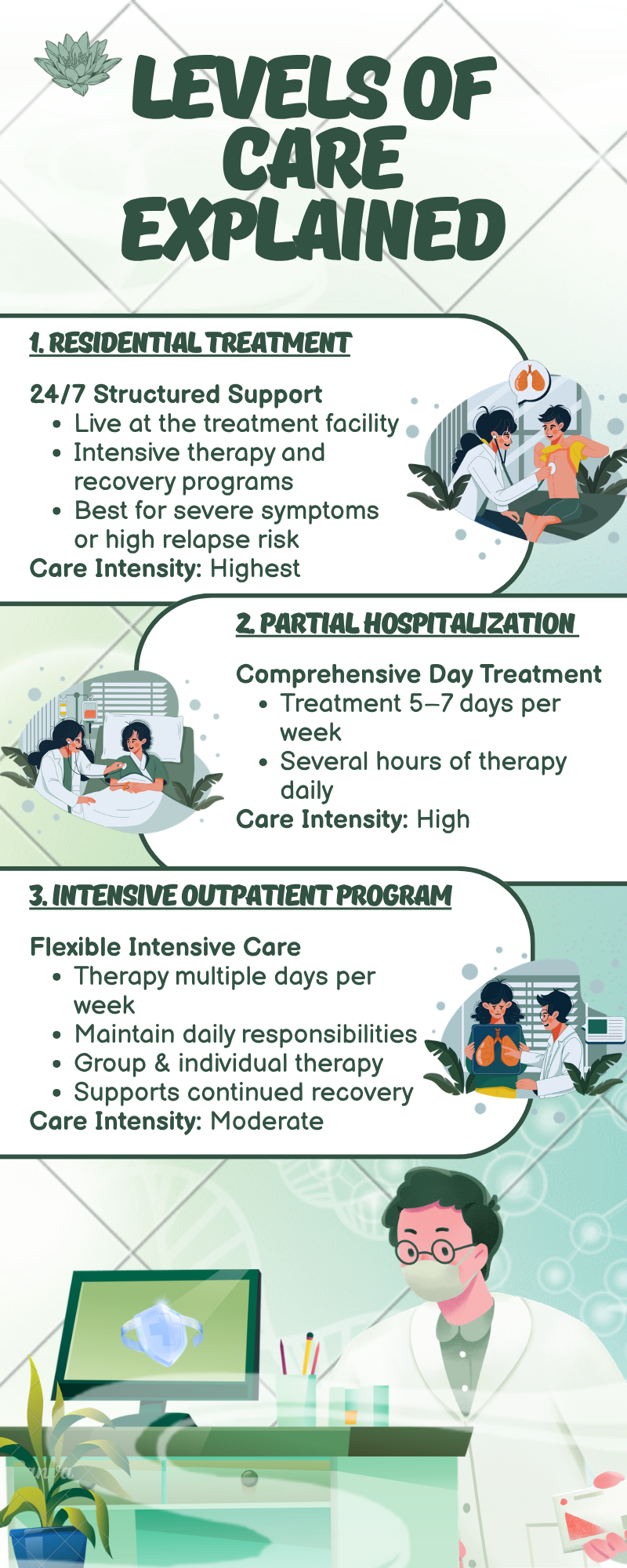
- Flexible Scheduling Blocks: Morning or evening sessions fit around your routine.
- Targeted Skill Application: You practice skills against real-life triggers.
- Autonomy With Accountability: You stay independent while getting weekly clinical support.
This kind of care can feel like a steady hand on your shoulder. Not heavy. Just enough.
How To Choose The Right Program
The best choice usually comes down to safety, function, and daily strain. If your symptoms are sharp and frequent, PHP may be the safer place to begin. If you can manage daily basics but keep sliding emotionally, IOP may be the better fit.
A clinical assessment should make the final call. Still, your own self-check matters. It helps the intake team understand where you are starting from.
- Symptom Severity: Daily panic, self-harm risk, or major instability usually point toward PHP.
- Functionality Check: If you can handle hygiene, meals, and basic safety, IOP may fit.
- Life Demands: School, work, and caregiving often push people toward IOP.
- Recovery Needs: Recent crisis or step-down needs often point toward PHP first.
The right level is not about pride. It is about fit. A bad fit can slow progress fast.
Read our latest blog, “How Intensive Outpatient Programs (IOP) Work For Mental Health In NJ”, to learn how this level of care supports recovery while still fitting into daily life.
A Real-World Transition
Clinical literature supports this step-down model. Published treatment data on DBT-informed outpatient care shows that people who move from PHP to IOP often improve faster than those who stay in one fixed level of care.
In these studies, symptom scores drop from intake to discharge, and the gradual reduction in intensity helps people stay safer while they regain stability.
That matters for adults with severe mood symptoms, panic, or suicidal thoughts. Instead of stopping care all at once, the lower step keeps support in place while independence grows. This layered approach helps prevent rehospitalization and supports steadier recovery.
Frequently Asked Questions
Can I Transition From PHP To IOP In New Jersey
Yes. This is called a step-down. Many people start in PHP, then move to IOP once they are more stable.
Does Health Insurance Pay For PHP And IOP In NJ
In many cases, yes. Most commercial plans cover both when they are medically needed.
What Happens If I Choose The Wrong Level
A clinical team reviews your needs during intake. If the level is off, they usually adjust your plan.
Find Your Best Fit
PHP and IOP are both strong options. The better one depends on how much support you need right now.
If you are unsure where to begin, contact our New Jersey clinical admissions team for an evaluation. We will help you sort through the options and choose the level of care that fits your life and your symptoms.


