

Can You Work While Attending PC or IOP in New Jersey?
Mental health issues can catch you off guard and impact almost all areas of life. If you don’t want this thing to penetrate your work and relationships, plan a treatment right away with an expert’s help.
They will likely ask you to start standard therapy, and if things (such as your depression or anxiety) are serious, they’ll step up your plan to Partial Care (PC) or Intensive Outpatient Treatment (IOP). Both these treatment options require a lot more time than therapy, and you’ll have to plan your life around them. Therefore, many wonder if they can work while attending PC or IOP in New Jersey, because they don’t want to damage their routine.
If you’re also unsure about how you’ll manage work with these treatment plans, keep reading, and we’ll clear your doubts.
Can You Work While Attending Partial Care or an Intensive Outpatient Program?
Before we answer whether you can work while attending PC or IOP in New Jersey, let’s understand how they work:
PC
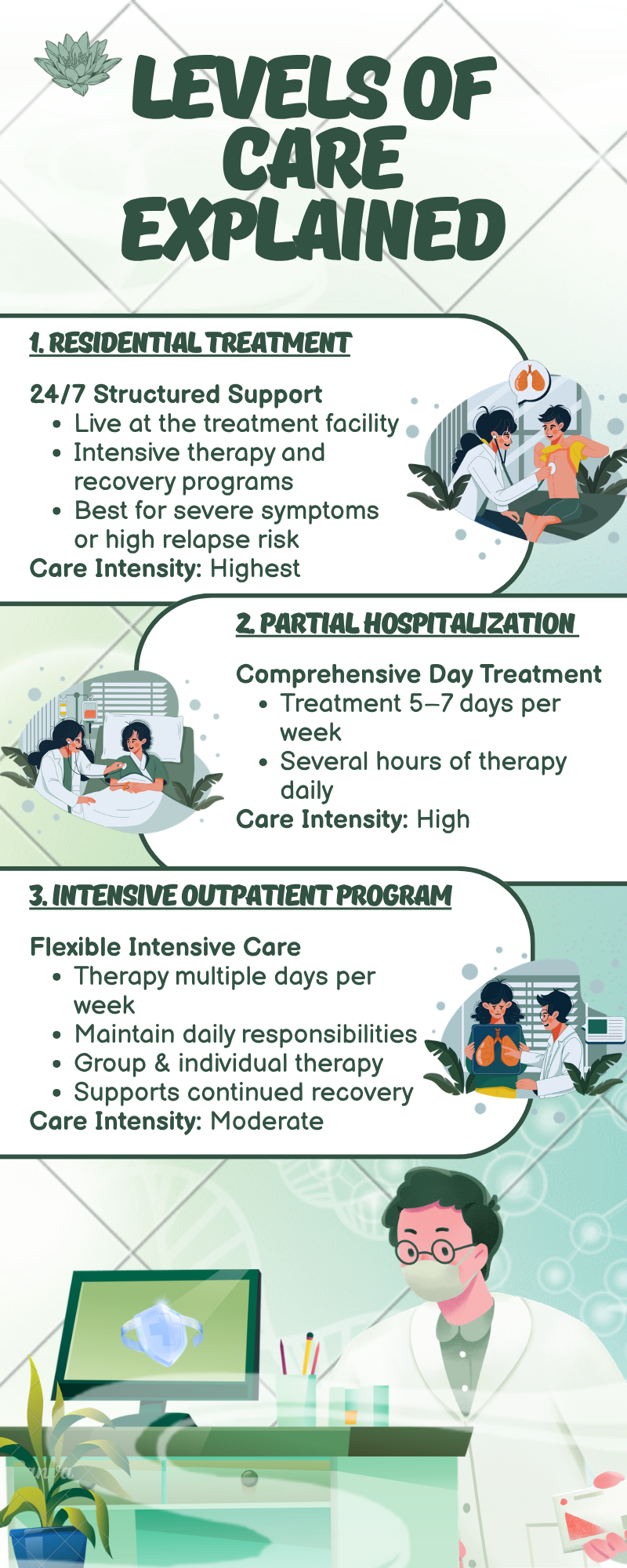
Partial Care (also called partial hospitalization or day treatment) is a strict treatment program, where you spend 4-8 hours each day at a treatment center.
These sessions are spread across 5 days a week, and completing this treatment becomes quite a commitment because of the regular sessions.
IOP
An Intensive Outpatient Program (IOP) requires you to spend 9-15 hours at a treatment center each week. Mostly, these sessions are 3 hours long, and you visit the center 3-5 days per week.
Now, as you can tell, PC is more demanding, and IOP is relatively relaxed, and that reflects in your ability to work while attending either of these.
Here is your short answer:
Working while attending PC is only realistic if your shifts fall outside the daytime hours (evenings or weekends) or if you apply for a treatment break. Most people take a break under the Family Medical Leave Act (FMLA), which ensures up to 12 weeks of unpaid and job-secured break to complete PC.
However, if you’re opting for IOP, continuing work is easier because of shorter and fewer sessions each week. You can easily request evening work shifts or (if that’s not an option) attend early morning IOP sessions because many facilities offer tracks designed around standard work hours. Also, you can delegate your optional workplace responsibilities to balance your stress levels when you have two commitments that require your time and energy.
How PC and IOP May Impact Your Work Life
Now that we understand how PC and IOP usually operate, let’s see how they impact your work life. Fixing your mental health goes beyond spending a few hours at a treatment center because it is tiring work that also seeps into other areas of your personality.
If you’re starting treatment, here are some things to understand:
Time Commitment
This is the most obvious: if you start mental health treatment, it’ll consume your time. For instance, PC may require 20-40 hours each week, and IOP will easily amount to 15 hours. Since most of this time goes from standard daytime hours, you’ll have to juggle multiple things. Put simply, if you have to work, do pick and drop duties, and go to a treatment center as well, the clock will always be ticking.
Therefore, experts recommend delegating some household and work responsibilities while you’re in treatment because it’ll only last for a certain time. If you can have someone else cover your extra duties at work or at home, utilize that, and also communicate with the management that you’ll need more leg space to focus on treatment.
Mental Exhaustion
We don’t talk enough about the mental burden that comes with mental health treatment. Processing therapeutic work can drain you mentally and emotionally, leaving little to no energy for work.
For instance, if you’re doing trauma therapy, your sessions with the therapist will involve replaying the memories and discussing their aftermath, which can easily exhaust you. So even if you manage to spare enough hours for work while receiving treatment in New Jersey, you wouldn’t be able to give your 100%.
It’s also worth mentioning that processing too many emotions and feelings can tire you physically as well – you might want some downtime after a 3-hour-long therapy session, and that’s totally fair. That’s why we suggest that you free your schedule to devote enough energy to treatment.
Attention Deficit
Evidence-based therapies and talk sessions with a counselor involve multiple things. You’ll discuss triggers, memories, current challenges, and negative beliefs to find a direction. And when so many things surface, they can keep you distracted even after you leave the therapist’s office.
Hence, many people seem distracted or lost when their treatment is going on the side because they’re busy reflecting and adjusting. That said, it’s always good to have a buffer after your treatment center visit because it lets you compose your focus.
Energy Consumption
Work and life responsibilities need energy, and when you spend a good deal of it at the PC or IOP, you have little left for anything else. However, if you have a supportive circle, i.e., family and colleagues, they’ll understand you’re not at your 100% and try to cover for you.
But if your ongoing mental health recovery in New Jersey still keeps you snappy, drained, or lost, it’s better to step away from other things besides treatment. A few dedicated weeks will do better than months of distracted efforts where you’re divided into many roles.
It’s Hard, But Doable
Resilience Behavioral Health understands that deciding to start treatment and fully committing to it requires a lot of dedication. But if you manage to push through despite the difficulties, the change will be beautiful.
So don’t let work or household responsibilities delay your treatment: step away for some time to come back stronger. We’re always here to lead the way so you can live a better future!


