

Trauma Symptoms That Shouldn’t Be Ignored: NJ Treatment Options
Warsan Shire said it most plainly: you can’t make homes out of human beings.
Yet, a lot of people try. They make homes out of staying busy, out of being the reliable one, out of keeping everything running so smoothly that no one ever thinks to ask if they are okay. And for a long time, that works. Or it works well enough. The days pass. The calendar fills. The performance of being fine becomes so practiced that it stops feeling like a performance at all.
And underneath it, something has been quietly there for years.
That is what this is about. Not the crisis that lands someone in an emergency room. The other kind. The kind that shows up as a general flatness you cannot explain, a body that will not stop bracing, and a version of yourself that got smaller somewhere along the way and never quite came back. Trauma treatment in NJ exists for that person too. Not only for the most visible wound. For the one no one else can see.
Trauma Symptoms You Shouldn’t Ignore
Most people picture trauma with a specific image in mind. The flashback. The breakdown. The moment someone cannot leave the house.
Those are real. Still, they are not the whole picture, and for a lot of people, they are not the picture at all.
Trauma can look like sitting at your own birthday dinner and feeling nothing. Watching everyone laugh from somewhere behind your own eyes. Present in the technical sense and nowhere close in any other. The mind, after something overwhelming, will turn the volume down on everything. It keeps protecting you long after there is anything left to protect you from, until the silence itself becomes the problem.
It can look like a chronic thing that your doctor cannot find an explanation for. The tension that lives between your shoulder blades. The stomach that has been unreliable for years. The fatigue that a full night of sleep does not fix. The body keeps the score.
And trauma can look like you. The way you have always been. The perfectionism you are almost proud of. The self-sufficiency that people admire. The way you do not really need people, the way other people seem to need people. These feel like personality. They have felt that way for so long. However, a lot of what we call “personality” began as protection. Ways of staying one step ahead of something that once felt genuinely dangerous. What kept you safe then can quietly limit you now, and it does it so smoothly that it never announces itself as a symptom.
The Thing You Tell Yourself
There is a particular argument that runs on a loop for a lot of people who have been carrying unaddressed trauma.
It was not that bad. Other people have been through so much worse. A war. A disaster. Something with a name that everyone would recognize. What happened to you does not qualify.
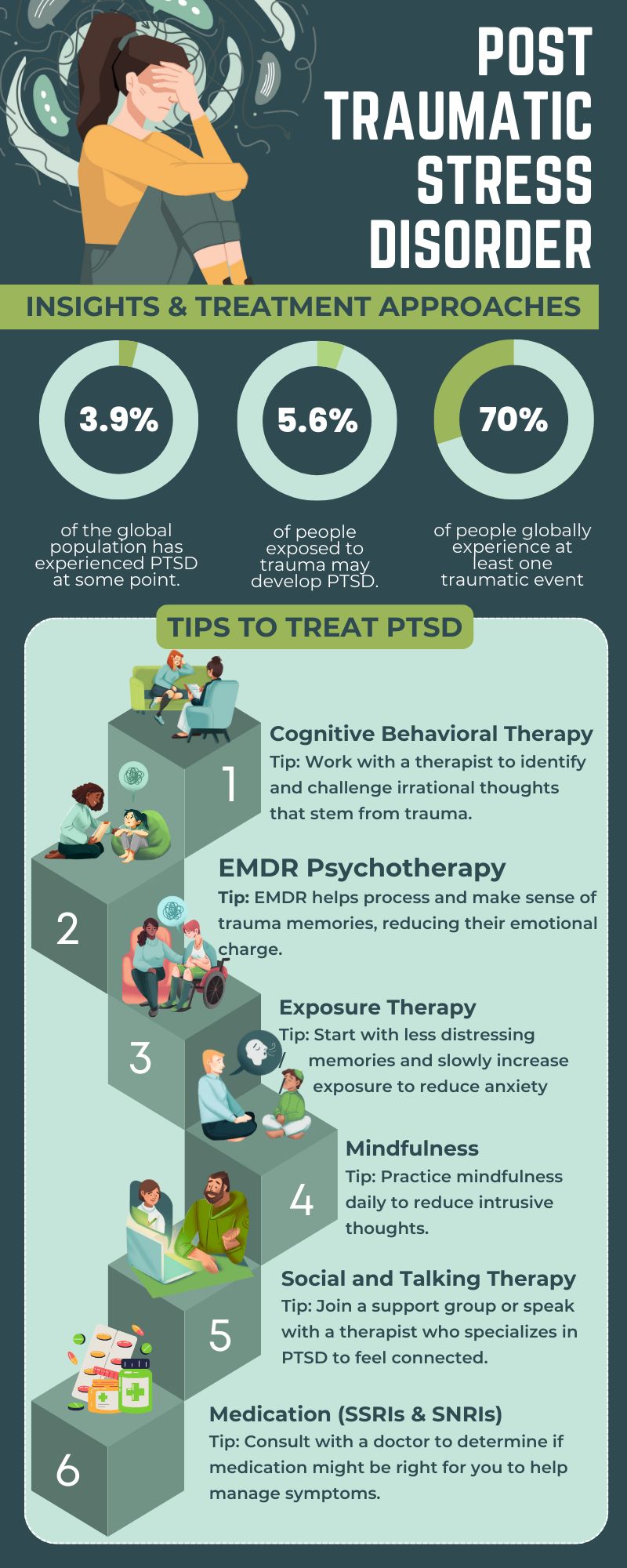
That argument feels reasonable. It is also exactly how trauma keeps people from getting help.
The nervous system does not compare. It does not measure your experience against someone else’s and issue a verdict on whether your response is proportionate. It responds to what it lived through. Emotional neglect that lasted years. A relationship that slowly made you feel like you were too much and never enough. Childhood that required you to be smaller than you were. These leave something behind. The absence of a visible scar does not mean there is no wound. It means the wound is somewhere harder to see.
What Trauma Treatment in New Jersey Looks Like
The right level of support depends entirely on where you are, not where you think you should be.
Eye Movement Desensitization and Reprocessing
EMDR works directly with the memories that still have too much charge in them. Not by going over them endlessly, but by helping the brain do the processing it could not do at the time. Things that used to ambush you in ordinary moments begin, slowly, to settle.
Cognitive Behavioral Therapy
It works with the story trauma built. The one that says you are not safe, or not worth much, or that letting people close always leads to something bad. That story feels like fact because it has been running in the background for so long. Seeing it clearly is not a small thing. It is often where real change starts.
Dialectical Behavior Therapy
DBT offers something more concrete. Not just insight, but tools. For the moments when the nervous system is flooded and understanding is not enough. Skills for sitting with distress without being destroyed by it. Skills for staying in a relationship without losing yourself inside it.
For some people, weekly therapy is the right fit. For others, particularly when trauma has tangled itself into daily functioning, into sleep, into how they move through relationships, a Partial Hospitalization Program or Intensive Outpatient Program in New Jersey offers something more sustained. More hours. More consistency. The kind of structured support that gives the nervous system enough safety to actually begin to change. You still go home. You are still in your life. But you are not doing it alone in the way you have been doing it alone.
Final Words
Reaching out about trauma treatment in New Jersey is not an admission that you cannot handle it. It is the recognition that you have been handling it by yourself for long enough. That there is another way. One that does not ask you to keep minimizing what happened, or push it further down, or wait for it to resolve into something you can finally stop noticing.
You already know how to show up. Showing up here is just the next form of it.
Resilience Behavioral Health provides trauma-informed treatment in New Jersey, including EMDR, CBT, PHP, and IOP levels of care. To speak with someone, call us today at (908) 263-1332 or visit our website!
Also Read: The Resilience Model: Trauma-Responsive Care Explained


