
How Long Do Mental Health Programs Last In New Jersey?
“No two recovery paths look the same.”
That is the truth behind treatment timelines. Some people need only a few weeks. Others need more time to steady the ground under their feet. If you are asking How Long Do Mental Health Programs Last In New Jersey?, The answer depends on your symptoms, your progress, and the level of care you need.
At Resilience Behavioral Health of New Jersey, we help people understand the process without the guesswork. This guide breaks down what affects length, how PHP and IOP usually differ, and what to expect from each step of care.
The Short Answer
There is no one schedule that fits everyone. Mental health treatment lasts as long as it is still helping you move forward. Once you are safer, steadier, and more able to cope, the team may step you down to a lower level of care.
That means length is guided by progress, not by a clock alone. A person with daily panic and unstable sleep may need more time than someone managing milder stress. Insurance review also matters, since ongoing treatment often needs clinical proof that the support is still needed.
- Symptom Severity: Stronger symptoms often mean a longer stay.
- Clinical Milestones: Safety, sleep, and emotional control shape discharge timing.
- Insurance Review: Coverage is often renewed through regular updates.
Breakdown By Level Of Care
The best way to understand mental health treatment duration NJ is to look at each level separately. Inpatient care is short and intense. PHP is more structured but still temporary. IOP lasts longer because it offers fewer hours each week. Standard outpatient care can continue for months or even longer.
|
Mental Health Program Type |
Average Daily Commitment |
Average Overall Duration |
Primary Clinical Focus |
|
Inpatient Crisis Stabilization |
24/7 residential care |
3 to 7 days |
Immediate safety and crisis resolution |
|
Partial Hospitalization (PHP) |
5 to 6 hours per day |
3 to 6 weeks |
Intensive daytime monitoring and stabilization |
|
Intensive Outpatient (IOP) |
3 hours per day or evening |
6 to 12 weeks |
Skill practice and community transition |
|
Traditional Outpatient Care |
1 hour per week |
Ongoing |
Maintenance, support, and growth |
This structure helps people avoid both extremes. You do not stay longer than needed, but you also do not leave too soon.
➡️ Read our latest blog, “PHP Vs IOP In New Jersey: Which Program Is Right For You?”, to compare both options and find the level of care that fits your needs.
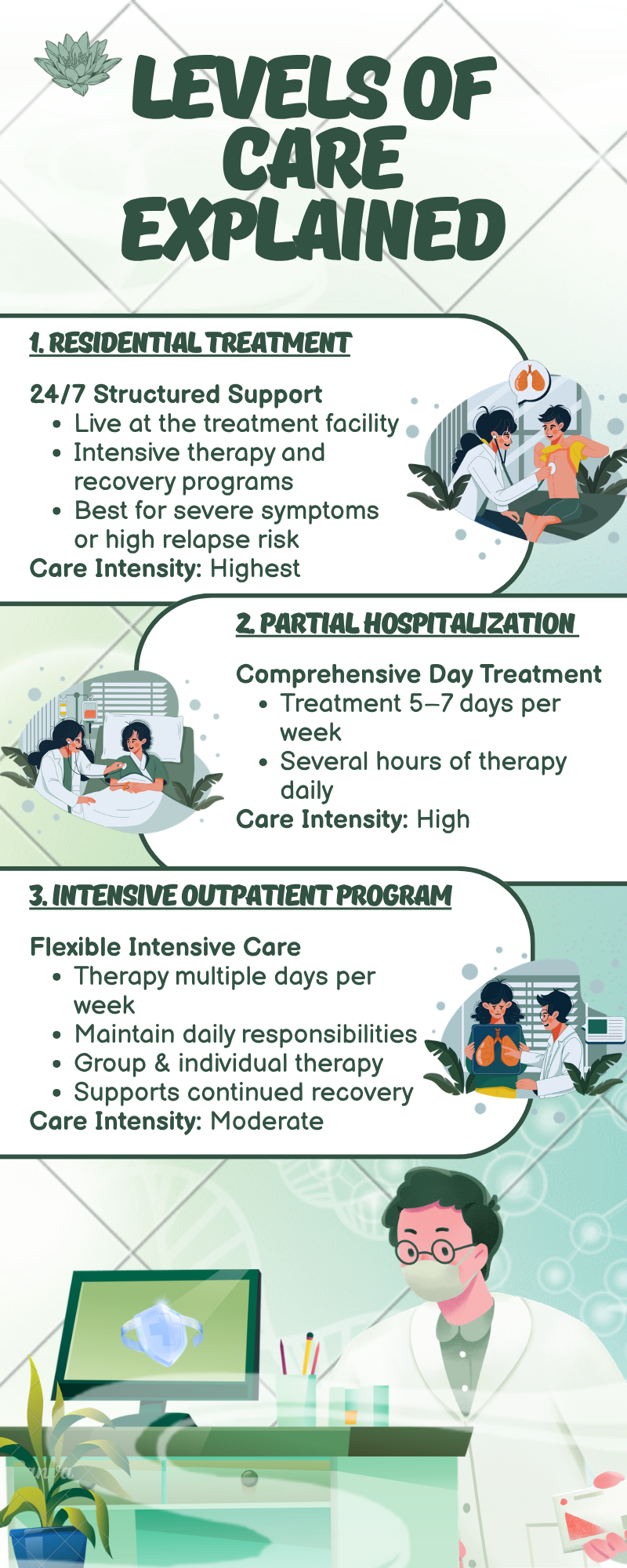
PHP Program Length New Jersey
A PHP program length New Jersey usually runs about four to six weeks. Some stays are shorter. A few go a bit longer if symptoms are still intense or progress is uneven.
PHP is built for fast stabilization. That is why it often includes 20 to 30 hours each week. The days are full. The support is close. It is meant for people who need strong structure before moving to a lighter track. If you want a sense of how that rhythm feels, you can also review what a full day in a PC program looks like in New Jersey.
What is IOP Timeline NJ
An IOP timeline NJ is usually longer. Many people stay for two to three months. That extra runway gives them time to practice coping skills in real life, not just in the room.
This matters because healing does not stop when the session ends. A person may need time to test new habits at work, at home, or in class. IOP gives room for that. It is the middle ground that helps people build confidence without losing support.
How Insurance And Regulation Shape The Stay
Treatment length is not only about symptoms. It is also shaped by coverage and clinical review. That can sound dull, but it matters a lot in real life.
Insurance companies often ask for updates so they can decide whether care should continue. At the same time, clinical teams track progress, safety, and discharge readiness. The goal is to keep treatment going only as long as it is truly useful.
- Concurrent Reviews: Clinical updates are sent to insurance carriers.
- Utilization Management: The care team helps prevent early cutoff.
- Discharge Criteria: Clear goals show when step-down is safe.
For a broader look at care models, the Substance Abuse and Mental Health Services Administration clinical guidelines can help explain how levels of care work across the system.
A Real-World Pattern In Care
A published outcome study in behavioral health literature followed adults with treatment-resistant depression who moved through variable-length care rather than fixed, one-size-fits-all programs. People who spent a few weeks in high-intensity daytime treatment, then stepped down into IOP, showed stronger symptom improvement and better stability over time.
That finding matches what many clinicians see every day. Some people need a short burst of heavy support. Others need a longer period of steadier care. The right length is the one that matches the job in front of you. No more. No less.
Frequently Asked Questions
Can I Leave A New Jersey Mental Health Program Early
Yes. PHP and IOP are usually voluntary. Still, leaving before the recommended time can raise the chance of relapse.
What If I Need More Time Than Insurance Approved
Your team can request more coverage if your symptoms still need active treatment. That is often done with updated clinical notes.
Does Program Length Differ For Mental Health Vs Substance Use Care In NJ
Yes, sometimes. Substance use care may begin with a detox phase, which can add a few days at the start.
Begin Your Tailored Recovery Plan
The length of treatment matters, but the fit matters more. A few focused weeks can change the direction of your life. A longer plan can do even more when symptoms are deeper or slower to settle.
If you are trying to figure out your next step, contact our New Jersey clinical admissions team for an individualized assessment. We will help you map a timeline that matches your needs, your safety, and your pace of recovery.