
Name(Required)

Saddle River High-Functioning IOP For Executive Mental Health

The Hidden Side of Success: Executive Mental Health & IOP Care in Saddle River

The Hidden Side of Success: Executive Mental Health & IOP Care in Saddle River

“Success is not final, failure is not fatal: it is the courage to continue that counts.” —Winston Churchill.

At Resilience Behavioral Health, this idea fits many leaders who look “fine” yet feel worn down inside. The National Institute of Mental Health reports that an estimated 23.1% of U.S. adults experienced any mental illness in 2022, which shows how common a hidden struggle can be even among high achievers. 

A Saddle River High-Functioning IOP supports Executive mental health Saddle River needs with structured therapy that fits around work and family life. By reading on, you’ll learn the key signs, what happens in IOP, and how to choose the next step without putting life on pause.

Why High-Achieving Professionals Struggle in Silence in Saddle River

High performers often learn to power through discomfort. However, the same drive can turn into a mask. You keep producing, so nobody asks questions. Meanwhile, the stress stacks up behind the scenes.

That’s why executive mental health support in Saddle River matters. It respects your responsibilities while addressing what’s really happening. You don’t need to “fall apart” to deserve structured help.

Executive Mental Health Saddle River: The Pressure Nobody Sees

You might fear being judged. You might also fear being recognized. In smaller communities, privacy feels priceless. So many people delay care, even when they know something is off.

Yet a quiet struggle has a cost. It can show up as irritability, numbness, or constant tension. It can also look like success with zero peace.

Common Coping Patterns That Look Normal Until They Don’t

Many high-functioning people lean on habits that seem harmless at first. Then the habit becomes the plan.

    • Alcohol as a Switch-Off Button: A drink becomes “routine,” not a choice.
    • Overwork as Avoidance: Work fills every emotional gap.
    • Stimulants Then Sedatives: Up for performance, down for sleep.
    • Isolation Disguised As Busyness: You “cancel” but really withdraw. 

Saddle River High-Functioning IOP: Structured Help Without Disappearing

A Saddle River High-Functioning IOP offers a practical middle ground. It provides structured therapy several times each week. At the same time, you keep sleeping at home. You keep showing up for life.

This is why many professionals choose Executive Mental Health Saddle River IOP care. It gives support that feels real and consistent. Yet it doesn’t require stepping away from every responsibility.

What High-Functioning IOP Means For Executive Mental Health Saddle River

An Intensive Outpatient Program is “intensive” because it meets more often than weekly therapy. It is “outpatient” because you don’t stay overnight. You build skills in session, then you test them in real life.

This structure helps when motivation is strong, but habits are stronger. It also helps when stress triggers old patterns fast.

Who This Program Fits Best

A Saddle River High-Functioning IOP often serves people who look “fine” on the outside. Yet they feel stretched thin internally.

  • Executives, entrepreneurs, and high-responsibility professionals
  • Parents and caregivers who can’t step away for weeks
  • People dealing with high-functioning anxiety, depression, or trauma symptoms
  • People use substances to cope, sleep, or “reset.” 

➡️ For a women-focused perspective that complements Executive mental health Saddle River support, read our latest blog: “Rumson, NJ Women’s Intensive Outpatient Program.”

The Hidden Signals: When Holding it Together Starts to Cost You

Sometimes the warning signs are loud. However, more often they are subtle. You don’t miss work, so it must be okay. Yet your body and mind keep sending signals.

That’s where executive mental health Saddle River treatment becomes a smart move. It helps you respond early, when change is easier. It also enables you to avoid a crisis that forces you to make decisions later.

Early Warning Signs That Point Toward A Mental Health Concern in Executives

Look for patterns, not one bad week. Then ask a simple question: “Is this getting better or just getting familiar?”

  • Sleep and Recovery Breakdown: You wake up wired, tired, or both.
  • Mood Shifts Hide Behind Productivity: You snap quickly, then feel guilty.
  • Over-Control Becomes Exhausting: You can’t relax unless everything is perfect.
  • Substances Become A Tool: You drink or use to feel “normal,” not to celebrate.
  • Relationships Feel Distant: You show up physically, but not emotionally. 

The Quiet Crisis Moment

High-functioning struggle often includes a private thought: “This isn’t sustainable.” You may not need emergency care. Still, you may feel one step away from losing control.

A Saddle River High-Functioning IOP can be that step between “white-knuckling” and absolute stability. It supports change while you still have choices.

What Happens Inside A Saddle River High-Functioning IOP (And Why It Works)
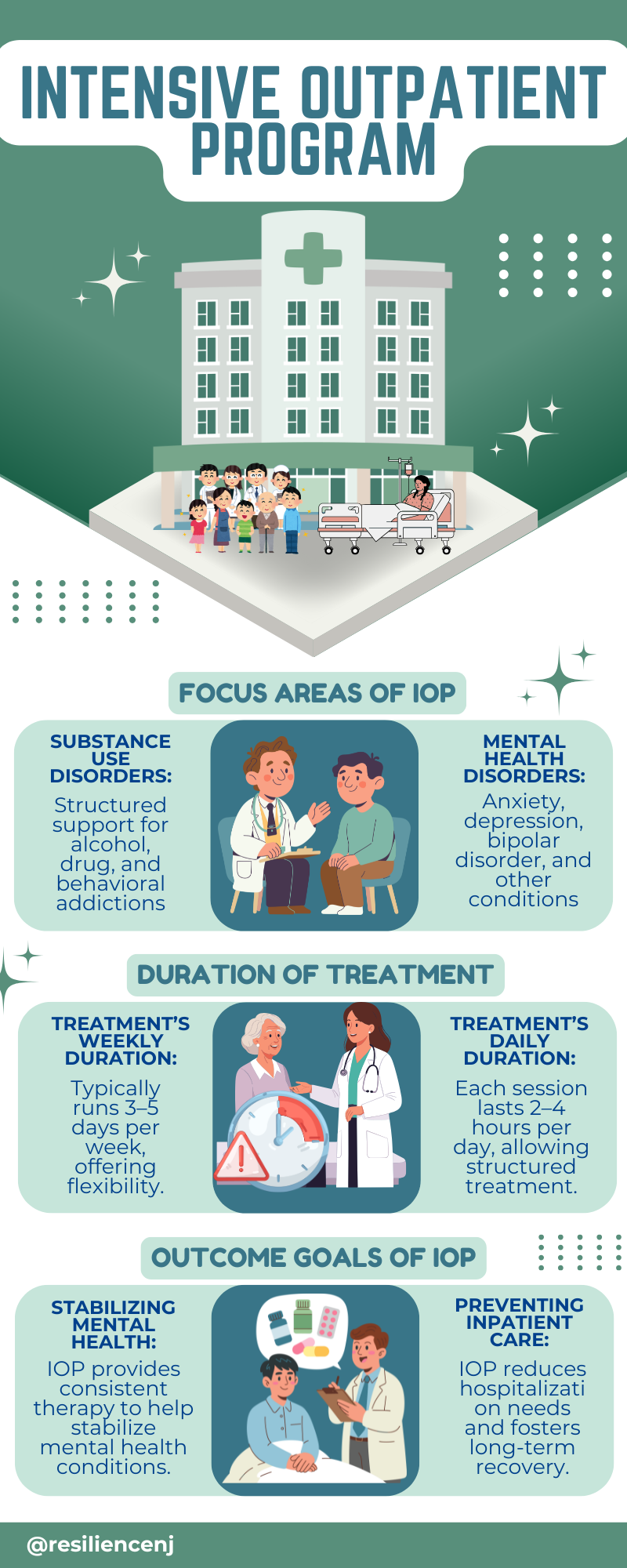
IOP works because it combines insight with action. You don’t just talk about stress. You learn what to do when stress hits. Then you practice it repeatedly.

That repetition matters for Executive mental health outcomes in Saddle River. Consistent sessions create momentum. They also generate accountability without shame.

Core Building Blocks Of Executive Mental Health Saddle River IOP Care

Most high-quality IOPs blend several pillars of support:

  • Group Therapy to reduce isolation and build connection
  • Individual therapy to target personal patterns and goals
  • Skills training for boundaries, emotional regulation, and coping strategies
  • Relapse prevention planning tied to your real schedule
  • Family involvement when it supports healing and stability

Skills Executives Actually Use At Work And Home

Good care respects real life. It helps you perform without breaking yourself.

Examples of practical tools include:

  • A “meeting-day” plan for anxiety spikes
  • Boundary scripts for emails, calls, and last-minute requests
  • Sleep routines that don’t rely on substances
  • Communication tools for conflict without escalation
Intensive Outpatient Program IOP Resilience New Jersey NJ

Phases Of Care In A Saddle River High-Functioning IOP

Progress feels easier when treatment has clear stages. Phases create direction. They also stop you from guessing whether you are “doing it right.”

A Saddle River High-Functioning IOP usually moves from stabilization to skill-building to step-down. Each phase builds on the last, so change becomes steady rather than fragile.

Phase 1: Stabilization And Clarity

  • First, the goal is stability. You and the clinical team map triggers, stressors, and risk factors. You also set clear goals that fit your life.
  • This phase often focuses on routines. Sleep, meals, and daily structure matter. Minor improvements here can create fast relief.

Phase 2: Skill-Building And Deeper Work

  • Next, the work goes deeper. You explore patterns like perfectionism, avoidance, and emotional shutdown. You also build coping skills that hold up under pressure.
  • This phase often includes relationship repair. It can also include trauma-focused support when appropriate. The goal stays practical: fewer symptoms and more control.

Phase 3: Step-Down And Real-World Practice

  • Finally, intensity usually decreases over time. You practice independence while staying supported. You bring real-life wins and setbacks back to the session.
  • This phase prepares you for ongoing care. You may transition to weekly therapy, alumni support, or community resources. You leave with a plan, not just hope.

How Confidential Care Supports Executive Mental Health Saddle River

Privacy concerns keep many people stuck. They worry about reputation and exposure. They also worry about being misunderstood by peers.

That’s why Executive mental health care in Saddle River should feel discreet and respectful. You deserve professionalism. You also deserve a space where honesty is safe.

Common Privacy Questions Professionals Ask

These questions are standard. Asking them is part of taking control.

  • Who has access to my information?
  • How do scheduling and attendance work?
  • What if I need flexibility around work demands?
  • Can family involvement stay limited and controlled?

Case Study: Proof That High-Functioning People Can Improve In IOP Without Stepping Away From Life

A well-known U.S. example comes from Hazelden Betty Ford’s published outcomes on its virtual Intensive Outpatient Program, where many participants kept working while receiving structured care and reported meaningful improvements over time. 

Their early findings showed reductions in depression and anxiety scores and fewer cravings, alongside high patient satisfaction—precisely the kind of “getting better without disappearing” result high-functioning professionals look for. 

For executives, the takeaway is practical: consistent sessions, accountability, and skills practice can shift symptoms even when life stays busy. It’s a helpful reminder that progress doesn’t require a public collapse—it requires the right level of support.

FAQs

What Does High-Functioning PTSD Look Like?

High-functioning PTSD looks like someone who meets their daily responsibilities while battling symptoms that others don’t see. They may excel at work, maintain relationships, and appear successful, but internally they’re managing distressing memories and avoiding reminders of traumatic events.

What is the Sneaky Red Flag of High-Functioning Anxiety?

Common emotional symptoms of high-functioning anxiety include: Constant worry and fear, even about minor matters. Overthinking and ruminating over decisions and outcomes. Difficulty concentrating, feeling as if your mind is racing or going blank.

What are the Characteristics of a Fully-Functioning Person?

Traits of a fully functioning person include openness to experience, living in the present, trust in oneself, congruence, unconditional positive regard for others, a strong sense of purpose, flexibility and adaptability, and emotional resilience.

Getting Started With Forrest Behavioral Health

If any part of this sounds familiar, don’t wait for a collapse. Start with a simple conversation. Ask questions. Share only what feels comfortable.

Forrest Behavioral Health can help you explore Executive mental health support and determine whether a Saddle River High-Functioning IOP is the right next step. 

Reach out for a confidential assessment and learn what care could look like without putting life on pause.