When Nights Are the Hardest: Why Evening IOP Helps
When the workday ends, do your symptoms clock in for a second shift?
That struggle isn’t rare. In 2022, 23.1% of adults lived with any mental illness, which means millions need care that fits a real schedule, not an ideal one.
An Intensive Outpatient Program (IOP) With Evening Hours offers structured therapy and skills practice for people who need more than weekly sessions but don’t need 24-hour supervision.
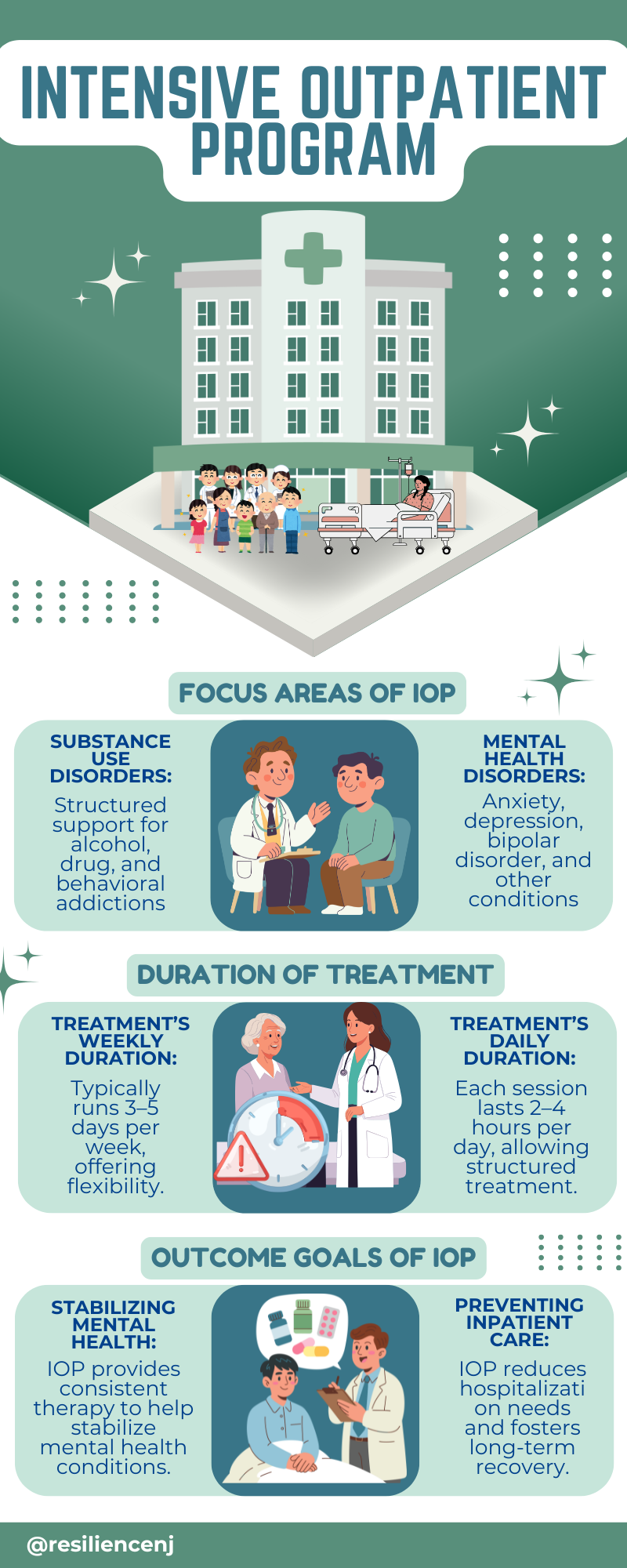
Many IOP models start with a minimum of 9 hours per week, often delivered as three 3-hour sessions.
An Intensive Outpatient Program (IOP) With Evening Hours puts that support after work. In this guide, you’ll learn what evening IOP looks like, who it fits, how long it lasts, and how to find an option that finally matches your schedule.
Intensive Outpatient Program (IOP) With Evening Hours: What it is and Why it Works
Evening IOP combines therapy, skill-building, and accountability in a set weekly schedule. Many programs deliver structured programming at “intensive” levels, often starting around 9 hours weekly.
That time creates momentum. It also keeps progress from fading between sessions.
Evening hours make the same care easier to attend. You keep your daytime routine. Yet you still show up consistently. That consistency matters because mental health work usually improves through repetition. It’s like practicing a new language. One lesson helps, but steady practice changes fluency.
Evening IOP Near Me: What “Evening Hours” Usually Look Like
Most evening schedules run after standard business hours. Many centers use a window like 5–9 PM, then adjust by location. That timing protects your workday. It also supports parents and caregivers. Therefore, Work-Friendly Mental Health Treatment becomes realistic.
Evening IOP usually meets several days each week. A common structure is three hours per day over three to four days each week, and that pace feels busy yet still lets you sleep at home.
Sample Evening IOP Schedule (Example)
| Day | Time | Core Focus |
| Monday | 6:00–9:00 PM | Skills group + planning |
| Tuesday | 6:00–9:00 PM | Process group + coping practice |
| Thursday | 6:00–9:00 PM | Relapse prevention or mood tools |
| Friday | Optional | Individual session or med check |
 For a deeper look at trauma recovery that often overlaps with after-hours care needs, read our latest blog: “Complex PTSD (C-PTSD) & Attachment Trauma Program”.
Work-Friendly Mental Health Treatment: Who Evening IOP Helps Most
Evening IOP fits people who feel stuck between “not sick enough” and “not okay.” You may keep a job, but your symptoms still bite. You may hold it together, then crash. If weekly therapy hasn’t been enough, work-friendly mental health Treatment can bridge the gap.
Evening IOP also fits people stepping down from a higher level of care. PHP usually requires more weekly hours than IOP. Noridian’s guidance defines PHP as at least 20 hours per week, while IOP is at least 9 hours per week. That step-down supports stability while you return to routine.
What Happens in an Evening Intensive Outpatient Program
Evening IOP isn’t only “talk about your week.” It’s structured care. You learn skills. You practice them. Then you review what worked. This loop builds confidence. It also helps you spot patterns earlier.
Most IOP models blend group therapy with individual support. Many programs also include education, care planning, and coordination. Clinical descriptions emphasize structured programming across multiple days. Therefore, Evening IOP Near Me should feel organized, not random.
Common Elements You Can Expect
- Group therapy for coping and connection.
- Skills training like CBT or DBT strategies.
- Individual sessions for goals and barriers.
- Medication support when clinically appropriate.
- Care coordination for work, family, and aftercare.
Evening IOP Near Me For Anxiety, Depression, Trauma, And Co-Occurring Needs
Evening IOP often supports anxiety, depression, trauma responses, and substance-related concerns. You don’t need a perfect label to start. You need a clear plan. Then you need a steady place to practice it.
IOP research commonly includes people with substance use disorders or co-occurring mental health and substance use disorders. That matters because overlap is common. Stress drives symptoms. Symptoms drive coping behaviors. Evening structure can interrupt that cycle.
What is The Difference Between IOP And Outpatient?
Standard outpatient care usually means fewer weekly sessions. It often looks like one therapy visit, then you return next week. In contrast, IOP runs more hours and more days. A well-known guideline describes intensive outpatient treatment as structured programming for about 9 hours or more weekly across 3–5 days.
That difference affects how fast you build traction. Outpatient can work well for maintenance and mild symptoms. Yet when symptoms disrupt daily function, IOP’s repetition can help. For a clear benchmark, Noridian describes IOP as 9–19 hours weekly. That intensity often makes Work Friendly Mental Health Treatment feel more effective.
IOP Vs Outpatient Vs PHP (Simple Table)
| Level Of Care | Typical Weekly Hours | Best Fit |
| Outpatient | Lower intensity | Stable symptoms, maintenance care |
| IOP | 9–19 hours | Needs structure while living at home |
| PHP | 20+ hours | Needs higher support without overnight stay |
What is Considered an Intensive Outpatient Program?
An intensive outpatient program provides structured therapy services at a higher weekly dose than standard outpatient. A common description is 9 hours or more per week across 3–5 days. That schedule gives you frequent contact. It also gives you time to practice skills between meetings.
Coverage definitions also use time thresholds. Noridian explains that IOP requires at least 9 hours per week, then PHP requires at least 20, that doesn’t make IOP “light.” It makes it targeted. Therefore, Evening IOP Near Me should offer both structure and flexibility.
How Long Should IOP Last?