
How To Choose The Right Level Of Care For Mental Health Treatment In NJ
“Healing begins the exact moment you find a therapeutic space that matches the weight of what you carry.”
Choosing care can feel confusing at first. One program may seem too light, while another may feel like too much. That is why How To Choose The Right Level Of Care For Mental Health Treatment In NJ matters so much. The right fit can help you heal without throwing your whole life off balance.
At Resilience Behavioral Health of New Jersey, we help people sort through mental health treatment programs in NJ with care and clarity. This guide explains the main levels, who they suit best, and how to tell when you need more or less support.
The Spectrum Of Clinical Acuity
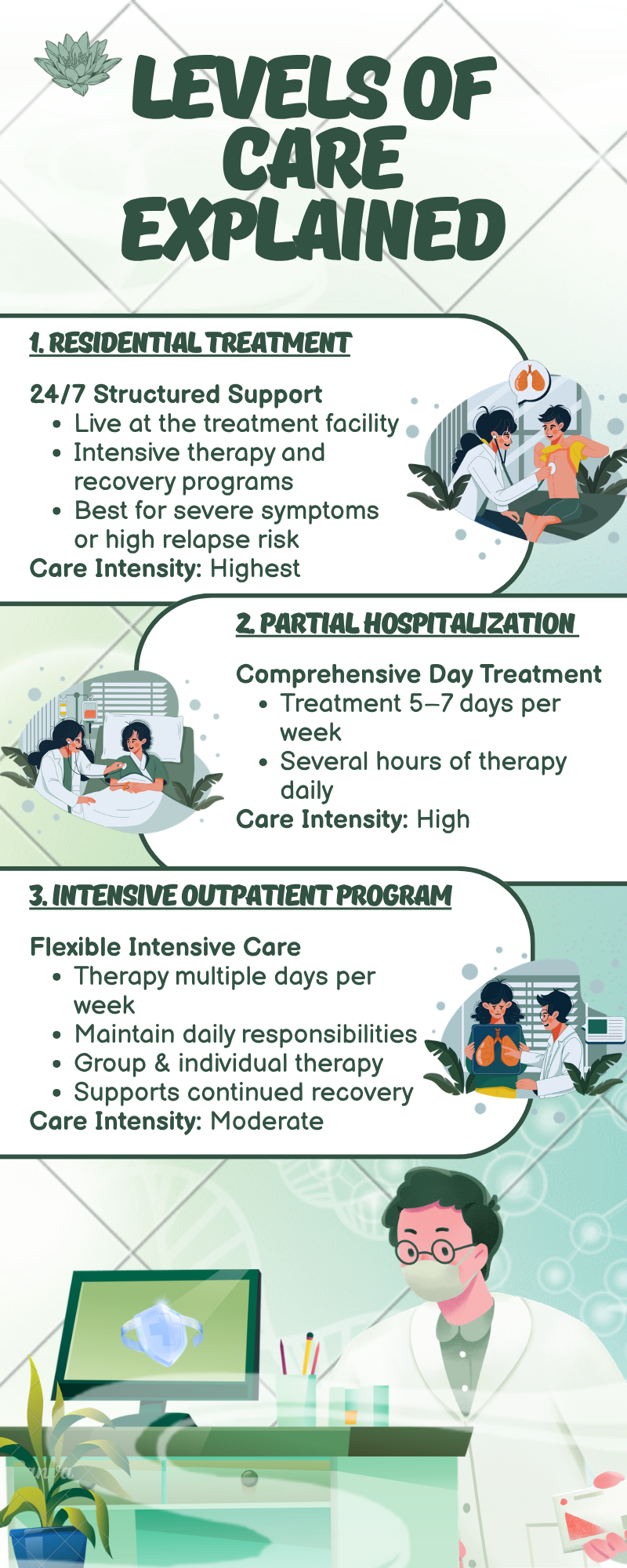
Mental health care is not one-size-fits-all. Some people need daily structure. Others need steady weekly support. The right level depends on how strong the symptoms are and how much they disrupt daily life.
Clinicians look at clinical acuity levels before recommending a plan. That means they look at safety, sleep, mood, work, home life, and how well you can manage basic tasks. Self-checks help, but they are not enough on their own. A trained assessment usually gives a clearer answer.
|
Care Tier |
Hours Of Clinical Treatment |
Best Suited For |
|
Residential Care |
24/7 monitored environment |
Severe safety concerns, psychosis, active withdrawal, or major functional loss |
|
Partial Hospitalization (PHP) |
5 to 6 hours daily, 5 days a week |
Strong symptom spikes with need for daily therapy and home at night |
|
Intensive Outpatient (IOP) |
3 hours daily, 3 to 5 days a week |
People who need structure but still manage work, school, or family life |
|
Standard Outpatient |
1 to 2 hours weekly |
Long-term support, symptom tracking, and skill building |
Residential Vs Outpatient Care New Jersey
The biggest difference between these options is how much support you need each day. Residential care gives you constant supervision. Outpatient care gives you treatment while you keep more of your normal routine.
This choice can feel heavy. After all, one path means leaving home for a while, and the other lets you sleep in your own bed. If your home feels safe and steady, outpatient care may be enough. If daily life feels shaky, a more structured setting may make more sense.
- Daily Safety: Is your home free from triggers and unsafe people?
- Medical Access: Do you need round-the-clock help with meds or crisis support?
- Daily Functioning: Can you eat, sleep, work, and shower without falling apart?
When A Partial Hospitalization Program Fits Best
A partial hospitalization program (PHP) NJ can be the sweet spot for many people. It gives strong daytime care without an overnight stay, which helps when symptoms are serious but not at a residential level.
PHP often includes group therapy, individual sessions, and medication review. It works like a bridge. You get more support than weekly therapy, but you still return home at night. That balance can matter a lot when life cannot fully pause.
Building Flexibility With IOP In NJ
An intensive outpatient program (IOP) in NJ is often a good step when you need structure but also need room to keep going with life. It can fit around jobs, classes, or family duties.
- It helps you keep your routine.
- It lets you practice coping skills at home each night.
- It connects you with peers who get it.
- It gives you more support than standard outpatient care.
➡️ Read our latest blog, “What Happens After You Call a Mental Health Program in New Jersey?”, to see what the first call really looks like and how it leads to the next step in care.
Real-World Case Study: Choosing The Right Path
A man in his forties once delayed care because he feared being “locked up” or stuck with a big bill. After he finally called a mental health program, the intake team asked a few calm questions, checked his insurance, and explained his options.
He was not sent to inpatient care. Instead, the clinician placed him in a partial hospitalization program (PHP) first, then stepped him down to intensive outpatient program (IOP) once his mood improved. He said the process felt less like a maze and more like getting a map. That first call changed everything.
Frequently Asked Questions
How Do I Know If I Need PHP Or IOP
PHP usually fits people who need several hours of treatment each day. IOP works better when you need support but still must handle work or school.
Will Insurance Decide My Level Of Care
Insurance can affect coverage, but a licensed clinician should guide the recommendation. The care plan should come from your needs first.
Can My Program Level Change Later
Yes. Good treatment centers adjust care as symptoms improve or shift. You can step up or step down when needed.
Find The Right Care Track
You do not have to sort this out alone. The right level of care can make recovery feel possible instead of overwhelming.
If you are trying to choose between outpatient support, PHP, or IOP, start with a professional assessment. Contact Resilience Behavioral Health of New Jersey to find the level of care that fits your life and helps you heal safely.