

C-PTSD & Attachment Trauma Explained: Symptoms, Triggers, and Treatment That Works
“You’re safe now… so why does your body still act like you aren’t?”
That question is one reason people keep searching for help, and it’s also why a Complex PTSD (C-PTSD) & Attachment Trauma Program matters. In one large U.S. survey, about 6.8% of adults reported PTSD at some point in their lives.
Yet complex trauma often reaches beyond fear memories and touches identity, emotions, and relationships.
Complex PTSD can include PTSD-like symptoms plus trouble managing emotions and staying connected, with feelings like shame, guilt, and worthlessness.
In this guide, you’ll learn what a Complex PTSD (C-PTSD) & Attachment Trauma Program includes, how attachment trauma shapes triggers and relationships, and the practical steps that help you feel steadier, so healing finally feels possible.
What A Complex PTSD (C-PTSD) & Attachment Trauma Program Treats (And Why It’s Different)
Complex PTSD (C-PTSD) is often linked to long-term, repeated trauma, especially trauma that happens in relationships or during early development. That history can shape how you feel about yourself, how you manage emotions, and how you connect with other people. Understanding trauma and attachment health can deepen context for why comprehensive anxiety treatment at Resilience includes structured therapeutic support that addresses underlying emotional patterns. Learning about trauma and attachment challenges adds depth to a reader’s perspective when considering intensive outpatient options like Students IOP in New Brunswick, NJ. For individuals dealing with severe trauma symptoms, transitioning into residential inpatient mental health care can provide the structured support needed for deeper recovery. This detailed guide on trauma recovery explains why some individuals require the structured therapeutic support offered through an intensive outpatient program in Union County NJ. People learning about trauma recovery may also benefit from reviewing behavioral health treatment in Salem County for evidence-based counseling and DBT support. This trauma-focused resource provides valuable context for readers researching depression treatment options in Hunterdon County. Readers researching trauma recovery and emotional regulation may also benefit from learning about behavioral health care options in Atlantic County, NJ. Readers learning about trauma and emotional healing may also benefit from reviewing faith-based mental health treatment in Parsippany, NJ. Readers researching trauma recovery may also benefit from learning about inpatient psychiatric care in Camden County, NJ. Trauma-focused care information in this article connects closely with outpatient mental health treatment in Bergen County, NJ, especially for long-term recovery planning.
ICD-11 describes PTSD and CPTSD as related but separate “sibling” conditions. In simple terms, C-PTSD includes the core PTSD symptoms, plus extra struggles in self-organization that affect emotions, identity, and relationships.
A Complex PTSD (C-PTSD) & Attachment Trauma Program often helps with:
- Emotional storms, shutdown, or numbness.
- Shame, guilt, and feeling “broken” inside.
- Relationship patterns that repeat, even when you try hard.
C-PTSD ICD-11 And C-PTSD Diagnostic Criteria (Simple Guide)
In Complex PTSD ICD-11, PTSD includes three main symptom clusters: re-experiencing in the present, avoidance, and a sense of current threat (like hypervigilance and startle). These symptoms can show up even when life is calm, because the nervous system still expects danger.
ICD-11 Complex PTSD diagnostic criteria add three more areas called “disturbances in self-organization.” These include affective dysregulation, negative self-concept, and disturbances in relationships, which often connect closely with attachment wounds.
- PTSD Clusters In ICD-11
- Re-Experiencing
- Avoidance
- Sense Of Threat
- Added C-PTSD “DSO” Clusters In ICD-11
- Affective Dysregulation
- Negative Self-Concept
- Disturbances In Relationships
Attachment Trauma And Why Relationships Can Feel Unsafe
Attachment trauma can happen when early caregivers were frightening, inconsistent, neglectful, or emotionally unsafe. Over time, the nervous system learns a painful rule: closeness equals danger. This is not your fault, but it can shape adult relationships.
Complex PTSD often includes relationship struggles, like difficulty feeling connected and trouble keeping relationships steady. That is why a Complex PTSD (C-PTSD) & Attachment Trauma Program not only processes memories—it also builds safe connection skills.
- Common attachment-related patterns that many people report
- People-pleasing, then resentment.
- Pulling away when things feel “too close.”
- Constant scanning for rejection.
- Feeling shame after needing support.
What C-PTSD Symptoms Look Like In Daily Life
Many people search for C-PTSD symptoms because the experience feels confusing and wide. You might have anxiety, depression, anger, numbness, or dissociation, and none of it feels “small.” You may also carry shame, guilt, and worthlessness that do not match who you are today.
The NHS describes complex PTSD symptoms as PTSD-like symptoms plus problems managing emotions and relationships. It also lists feelings of worthlessness, shame, and guilt, and trouble controlling emotions or connecting with others.
- Daily-life signs that can fit C-PTSD symptoms
- You overreact, then feel ashamed.
- You freeze during conflict.
- You struggle to trust compliments.
- You feel safer alone, but also lonely.
What are the 17 symptoms of complex PTSD?
| # | Symptom | How It Can Show Up | ICD-11 Area |
| 1 | Flashbacks/reliving | Feels like it’s happening again | PTSD cluster |
| 2 | Avoidance | Avoiding places, people, feelings | PTSD cluster |
| 3 | Feeling “on guard” | Hypervigilance, jumpy, tense | PTSD cluster |
| 4 | Big emotions | Quick fear, anger, overwhelm | DSO: Emotion regulation |
| 5 | Emotional numbness | Shutdown, flat mood, “blank” | DSO-related |
| 6 | Irritability | Snapping, short fuse | DSO-related |
| 7 | Shame | “I’m bad” feeling | DSO: Negative self-concept |
| 8 | Guilt | “It was my fault” loop | DSO: Negative self-concept |
| 9 | Worthlessness | Low self-value | DSO: Negative self-concept |
| 10 | Relationship strain | Push-pull closeness | DSO: Relationships |
| 11 | Hard to trust | Expecting betrayal | DSO: Relationships |
| 12 | Feeling disconnected | “I can’t feel close” | DSO: Relationships |
| 13 | Dissociation | Spacing out, unreal feeling | Trauma-related feature |
| 14 | Harsh inner critic | Constant self-attack | DSO: Negative self-concept |
| 15 | Anxiety | Constant dread without reason | Common co-occurring issue |
| 16 | Sleep issues | Nightmares, insomnia | PTSD impact |
| 17 | Focus problems | Brain fog, forgetful | PTSD impact |
For help navigating coverage questions that can impact access to care, read our latest blog: “GHI/EmblemHealth For NJ City Employees”.
What Does A C-PTSD Trigger Feel Like?
A trigger can feel like your body gets hijacked. Your chest tightens, your stomach drops, or your mind races. Then, emotions arrive fast, and logic feels far away.
People with complex PTSD may feel intense fear, shame, guilt, anger, sadness, and a lowered sense of self-worth during triggers. These reactions can be powerful even when the trigger seems minor to others.
- Common trigger themes.
- Criticism or feeling “in trouble.”
- Someone is going quiet or distant.
- Being ignored, interrupted, or dismissed.
- Feeling trapped, rushed, or watched.
How Do You Treat C-PTSD In A Complex PTSD (C-PTSD) & Attachment Trauma Program?
Effective care usually starts with stability. That means learning grounding skills, emotional regulation, and safe coping. Then, once the system can tolerate it, trauma processing becomes safer and more effective.
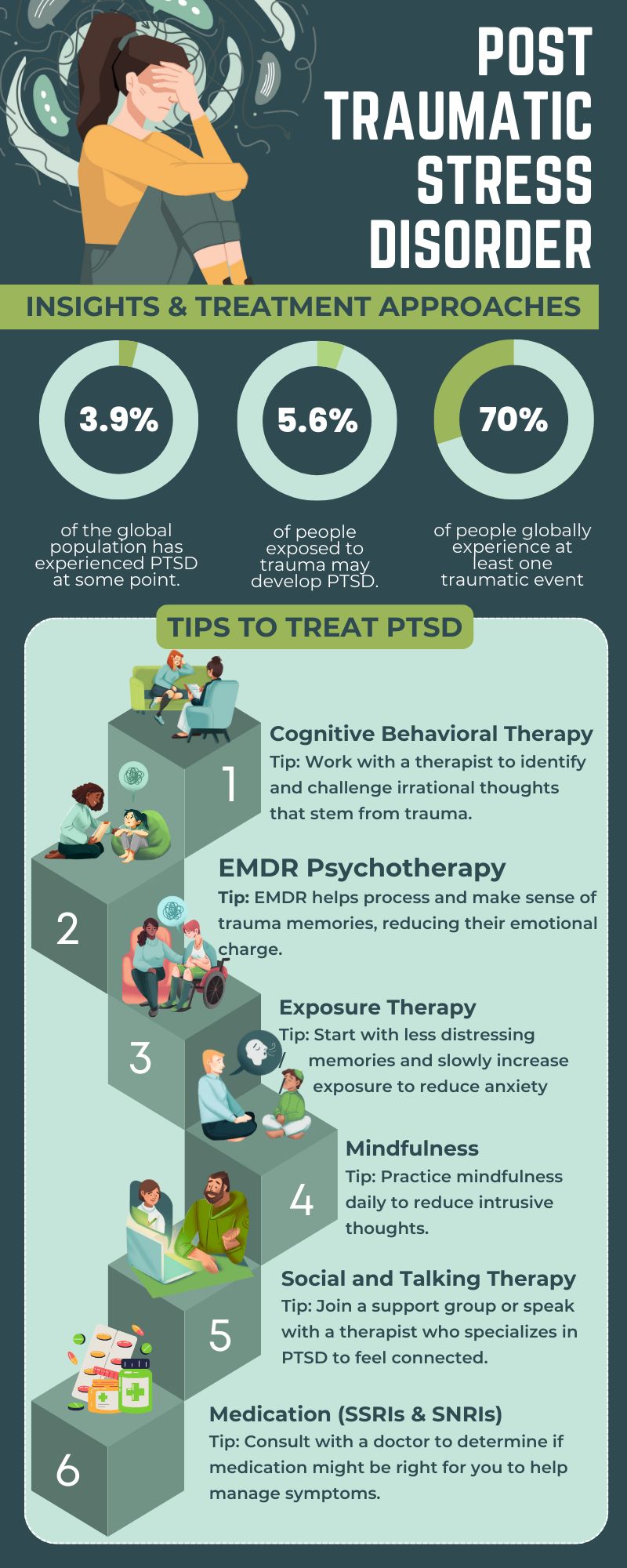
The NHS notes that complex PTSD treatment may include therapies used for PTSD, such as trauma-focused CBT and EMDR, and also treatment for related problems like depression or alcohol addiction.
In a strong Complex PTSD (C-PTSD) & Attachment Trauma Program, those methods are often combined with attachment-focused and body-based support.
Core Approaches We May Use
- Trauma-Focused CBT (structured skills + trauma work).
- EMDR (trauma processing).
- IFS (parts work and internal safety).
- NARM (relational trauma healing).
- DBT skills (emotion regulation and distress tolerance).
- Somatic practices (body-based grounding).
- Mindfulness (building a pause before reaction).
Program Phases
| Program Phase | What We Focus On | Why It Helps |
| Stabilization & Safety | Skills, grounding, support planning | Helps you stay present during stress |
| Processing Trauma | Careful trauma work (like EMDR) | Lowers intensity of triggers over time |
| Attachment Repair | Boundaries, trust, healthy connection | Builds safer relationships |
| Integration | Routines, relapse prevention, aftercare | Helps progress last |
C-PTSD Test, Support Levels, And Practical Questions
Many people look for a C-PTSD test because they want clarity. A screening tool can guide questions, but it cannot replace a full clinical assessment. The research on ICD-11 PTSD and CPTSD discusses the International Trauma Questionnaire (ITQ) as a self-report measure developed to assess ICD-11 PTSD and CPTSD.
People also wonder, is complex PTSD a disability. The answer depends on how much symptoms limit daily functioning and what documentation is required, so a professional evaluation matters. At the same time, you do not need to “prove” suffering to deserve help—support is valid even before a label.
Questions That Help You Choose The Right Care
- Do triggers disrupt work or relationships weekly?
- Do you shut down, dissociate, or self-medicate to cope?
- Do you need more structure than weekly therapy offers?
CPTSD vs BPD: Why They Are Often Confused
People search CPTSD vs BPD because both can involve intense emotions and relationship pain. However, they are not the same, and treatment planning changes based on the real driver of symptoms.
ICD-11 describes CPTSD as PTSD symptoms plus disturbances in self-organization, including relationship disturbances and negative self-concept. Because those features can look like other conditions, a careful assessment helps avoid the wrong label and the wrong plan.
Helpful Mindset
- Focus on patterns, not self-diagnosis.
- Share your full trauma history with a clinician.
- Ask about treatment goals, not just diagnoses.
Phased Telehealth Treatment For A Rural Woman Veteran With Complex PTSD (2023 Case Study)
A real-world example comes from a 2023 published case study describing a rural woman veteran living with complex PTSD who received phased trauma treatment through synchronous telehealth. Understanding trauma-related conditions can help you better explore treatment options like behavioral health treatment in Camden County NJ for comprehensive care.
The report highlights a practical problem many people face: when care is far away, symptoms like emotional flooding, shutdown, and relationship fear can still be addressed with structured, step-by-step therapy rather than “just talking.”
Most importantly, the case shows why a Complex PTSD (C-PTSD) & Attachment Trauma Program often works best in phases—building safety and skills first, then carefully processing trauma, and finally strengthening connection and daily functioning.
Ready To Talk With Resilience Behavioral Health?
Complex trauma can keep showing up long after the danger is gone. If your days swing between numb and overwhelmed, or closeness feels risky, you do not have to manage it alone.
In our Complex PTSD (C-PTSD) & Attachment Trauma Program, Resilience Behavioral Health helps you build safety first, then process trauma, and finally practice healthier connections. Learning about trauma-related conditions provides essential background when considering outpatient mental health treatment in Middlesex County, NJ for ongoing emotional support.
Are triggers running your schedule? Are you tired of repeating the same relationship pattern?
Reach out today for an assessment and a clear care plan. Bring your questions, your history, and your goals. The next step can be small, but it can change everything. This trauma‑focused informational resource explores Complex PTSD (C‑PTSD) and attachment‑related challenges with context that enriches insight into intensive outpatient care like executive IOP in Englewood Cliffs, NJ. The article on complex trauma explains underlying emotional patterns that often inform care strategies for structured programs like intensive outpatient Hudson County NJ. Understanding trauma-related conditions like C-PTSD can help readers better grasp when residential inpatient mental health treatment becomes necessary for long-term healing. Exploring the causes and complications of trauma in depth can help readers understand when serious symptoms might lead someone to consider residential inpatient mental health treatment. Learning how legal mental health evaluations work offers useful background for readers considering structured outpatient support such as the Marlboro IOP guide.
FAQs
What Does A C-PTSD Trigger Feel Like?
A C-PTSD trigger can feel like a sudden wave of fear, shame, guilt, anger, or sadness that is hard to control. It can also include body symptoms like tension, racing heart, numbness, or shutdown.
Is CPTSD A Brain Injury?
C-PTSD is not usually described as a “brain injury” in the same way as a concussion. However, trauma can affect how the brain and nervous system respond to stress, which is why symptoms feel so physical. The good news is that the brain can relearn safety through treatment and practice.
What Is The Difference Between Complex PTSD And C-PTSD?
Most of the time, “Complex PTSD” and “C-PTSD” mean the same thing—just different wording. ICD-11 separates PTSD and CPTSD, and explains that CPTSD includes PTSD symptoms plus disturbances in self-organization. Informational content that explains trauma and PTSD treatment, giving broader context to mental health care that may be relevant for someone exploring intensive outpatient programs.
How Do You Treat C-PTSD?
Complex PTSD treatment may include trauma-focused CBT or EMDR, along with support for related issues like depression or alcohol addiction. Many people also benefit from skills training, somatic work, and attachment-focused therapy that supports safer connections.


